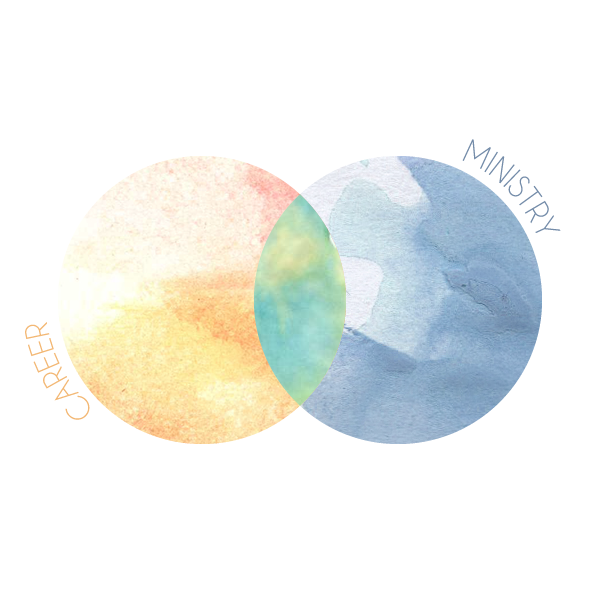
The intersection of ministry and career

It’s no secret that I love what I do.  I was once asked, “If you could do any job in the world what would it be?”  Without thinking I leaned over to Meredith and said, “Web designer.” (I did then say I’d also be an adventurous archeologist like Indiana Jones, but that’s besides the point)

I count myself extremely blessed to have a career that not only provides for my family, it makes me happy doing it and has provided numerous ministry opportunities along the way.  We’ve created Web sites for churches, Christian bloggers, worship leaders, and non-profits with a Christian mission.  It’s a very humbling and encouraging realization that the work we’ve done has made a difference in the world.

That’s what we’ve set out to do from the beginning, though.  Our company name comes from the Latin phrase, “Dominus illuminatio mea,” meaning “the Lord is my light.”  We serve all kinds of companies and organizations, with many different backgrounds, but we approach each project from the same foundation.  We’re not just working for a paycheck.  We’re serving a higher calling, and loving every minute of it.

This career path has also opened other doors in ministry unrelated to the Web.  The opportunity for remote client relationships allowed us to move the company to Colorado and support a new church.  Most jobs wouldn’t provide that amount of flexibility.

The truth is, though, everything we do should have a ministerial approach.  We need to realize that our career is not only overlapped by our ministry, it is completely enveloped.  So, whether we’re working for a church or a corporation, we’re working hard to do everything for the glory of God.  That’s the real secret to making work so fun.

So, what do you do and how do you see your career and ministry overlap?

3 Products that make dull chores fun

A lot of times we don’t appreciate the little things product developers do that make our everyday lives just a little better.  Sometimes it’s just a little tweak on an established product that complete changes the overall experience.  I especially love seeing a company take the initiative to convert a wide-used and efficient item into something even better.  It’s all about going from good to great.  These are some of those products:

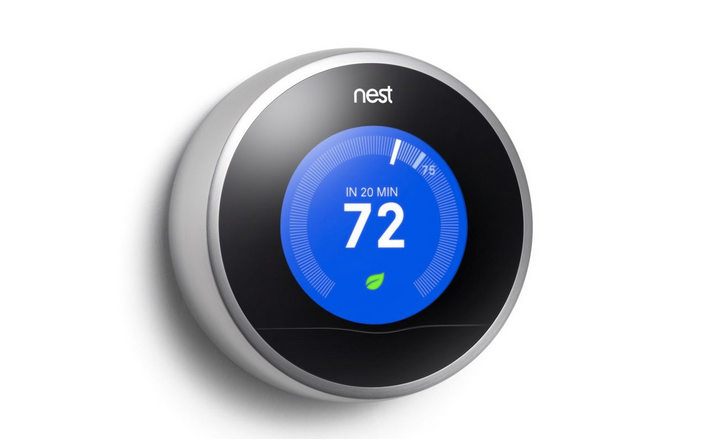
Nest Thermostat

The Nest thermostat lets home owners set their temperature settings on a innovative schedule to mindlessly save money on heating and cooling bills.  The interface is so simple to use, that anyone can easily program their temperature schedule in a matter of minutes, and Nest will remember.  No more turning the heat down at night or having a friend turn your AC back on before you get back from vacation.  Even if you forget to program your Nest before you leave the house their smartphone app has your back and lets you update your home remotely.

The best part about Nest is the interface, though.  One simple wheel and a button lets you control every setting you’d ever dream of (and then some).  It makes setting your thermostat fun and easy, and you’ll feel really good about all the money you’re saving, too.

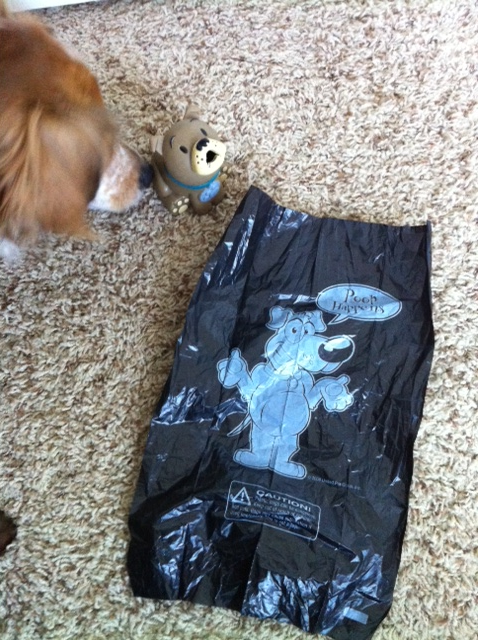
Conversational Doggie Bags

My wife and I received these as a gag gift one time, but I’ve got to be honest: I love them.  United Pet Group creates these doggie bags with quirky poop puns and comical illustration on each one.  Although cleaning up after your dog may be the dumps (pun intended), United Pet Group has managed to make me crack a smile while doing so.  My personal favorite is a picture of a hippie dog saying, “Make poop, not war.”  It may not save time or money, but it brightens your day and I applaud United Pet Group for making a good product even better.

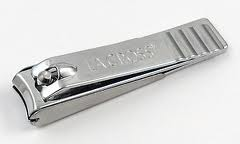
La Cross Clip Catcher

Clipping your fingernails is tedious enough when you have to trim your nails often.  Then you throw in the added frustration (and sometimes danger) of nail clippings soaring through the air in every direction.  Not anymore, thanks to the La Cross Clip Catcher.  It may not be a new product, but I’m surprised every nail trimming set doesn’t come equipped with one of these.  The simple metal guard encloses the side of the trimmer and successfully catches most, if not all, of the fingernail clippings.  Then, when it gets full, the metal guard slides back and the clippings fall out.  Other than that it’s a normal fingernail clipper.  Without the hassle of chasing my excommunicated nails around the bathroom I can trim my nails back in half the time and move on to move important things.  I give it two thumbs (and thumbnails) up.

What’s the point?

These products are great, and they make everyday life better.  Even though another product existed before these, these companies set out to make the experience even better.  It’s something we always strive to accomplish at Illuminate Design Studio, too.  We create Web sites with innovative user experiences to redefine the way users interact, make processes more efficient, and convert the mundane into fun.

So, what products do you see that have revolutionized an existing idea?

Why we’re going into the Hamster Hat business

After years of market research and planning, we’ve decided to switch our focus from developing Web sites and integrated marketing solutions to the exciting world of fashion. Specifically, the fast-paced, fashion industry of hamster hats.

Hamster hats have been an extremely untapped source of revenue for some time now and we’re ready to grab our piece of the pie.  In a world flooded with hamster wheels, balls, and cedar chips, we’re excited to usher in a new age of stylish headgear for the modern rodent aficionado.

Our first line of products will feature such classics as:

The Cuddly Cowboy

The Fuzzy Fedora

And the Fluffy Frenchman

We also plan to launch a line of specialty hats in the near future for true fans and collectors the world over.  So far, we have three in production, which include:

The Cosmonaut (perfect for Russian Dwarfs)

The Pharaoh

And the Duck Dynasty


Of course, all our models are guaranteed to fit all hamster breeds and are made of non-toxic, recycled hamster pellets.  For more information, and to place orders, please visit http://www.illuminatedesignstudio.com/hamsterhats/

The future of Web design

I love my job and the many opportunities that come with it.  I love that I get excited about up-and-coming technology, new knowledge, and breakthroughs that make your online experience (and hopefully your lives) better.  I also love the direction our browsers are taking us.

If you haven’t heard of responsive Web design, don’t worry.  A lot of Web designers still haven’t heard of it, and even fewer are using it.  The idea has only been around for about two years, and it’s acceptance as a Web standard is even younger.  But in June of this year, the World Wide Web Consortium (W3C) officially released a recommendation that Web sites be created using responsive design.

But what is Responsive Web Design?
Responsive Web design is a practice of creating Web sites with fluid layouts which adapt to individual viewing screens.  So what does that mean for you and your Web site?  It means that we can create one site that looks good on any device, no matter the screen size.
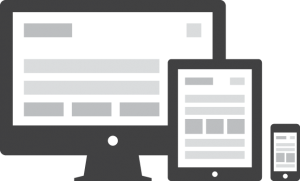
Responsive Web Design

The recent push for responsive Web design has come from the overwhelming influx of post-PC devices.  It’s predicted that, by 2014, mobile internet usage will exceed desktop computers.  This has created a need to adapt our online experiences from a desktop-only approach and cater to emerging devices.

Unfortunately, these devices not only have smaller screens with different aspect ratios, but the interface is completely different.  We use pokes instead of clicks.  Swipes instead of scrolls.  Pinches instead of zooms.  And we load pages on the fly, over wireless networks, from anywhere.

So the game is changing for Web developers around the world.  The challenge to deliver Web sites that look great and work well on a wide range of devices requires a shift in the very basic ways we create the sites.  Historically, Web pages started with fixed width layouts, meaning the designer created a page that was exactly so many pixels wide.  This worked well on most desktop computer screens, but the new arrival of smaller (and larger) screens means that a fixed-width page is going too be too big or too small.

In the past few years, the Web design community has risen to meet this challenge with the creation of stand-alone mobile sites.  If you have a smart phone, you’ve probably seen a mobile site.  While they have the ability to create a great experience for specific devices, there are still two major obstacles.  The first is that a new implementation of the site must be created to address each platform.  To minimally capitalize on the screen size of each device you’d have to create at least three versions of your site: for phones, tablets, and desktops.  But that means paying for at least three Web sites.  And there’s still the possibility that another platform will emerge that your Web site cannot cater to.  The second obstacle is the maintenance of each stand-alone site.  By creating multiple sites, the content on each instance must be kept up-to-date.  That means multiple amounts of work or increases in third-party update fees.

That’s why I’m so excited about the direction my field is going.  Responsive Web designing allows us to create one Web page that not only fills each screen, it adapts the content to suit each audience.  We have the power to make buttons bigger on touch screen devices or reveal extra content on extra large monitors.  It’s the ideal solution to the continuing emergence of Post-PC devices and will ensure that the sites we at Illuminate Design Studio create will look great to any viewer and work well.  That’s always been our goal and we’re glad to see that the future will continue to hold more opportunities for us to fulfill our vision.

We’d love to design a responsive site for you.  If you’d like to learn more, request a proposal and we’d love to tell you more about the solutions we can offer you.

Moving West

If you haven’t heard yet, we’re moving out headquarters out West to Loveland, Colorado.  It’s about 45 minutes north of Denver and provides lots of new Web development opportunities that we’re very excited about.  We’ll be making the trek next week, so please bear with us if our blog doesn’t stay up-to-date for a week or two, but we promise we’ll be back up and running very soon!

Why I love what I do

The longer I work as a Web developer, the more I realize that I love what I do.  I count this as a huge blessing.  While most people dread their work, or at least consider it menial, I find myself again and again looking forward to upcoming projects.

Growing up, my Dad always encouraged me to find a job that I like so much that I’d do it for free and do it so well that I get paid.  It has been great advice and God has blessed me so much that I have found that job.

The thing I love most about Web development is the ability to think both analytically and artistically.  The constant switch between left and right brain makes my work always interesting and keeps me on my toes.  Every project is a new challenge that requires different skills, and I love that I get the opportunity to grow as a developer and learn at each new turn.

The ever-changing landscape of the Web that demands I constantly learn and adapt is a huge benefit in my career.  I’ve never been the type of person who could work in a repetitive position, using the same skill day in and day out.  This on-going pressure to grow keeps me on my toes and insures that things stay interesting.

Do you love what you do?  If so, we’d love to partner with you.  We’ve found that our best work come from companies with a clear vision and appreciation of what they do.  Leave us a comment and let us know why you love what you.

Living in a Post-PC world

Today’s internet landscape is rapidly changing. Whether you realize it or not, the world’s dependence on stationary computers is shifting to a more mobile alternative: Post-PC devices like smartphones and tablets.  It makes sense, too.  When you can do as much or more on a device that fits in your pocket and lets you travel anywhere, why would you want to limit yourself to a heavy, stationary computer?

We recently did some data crunching on a client’s Web site and projected that, by the end of this year, 12.9% of all visitors will be on mobile devices, and our other sites are seeing similar trends.  When one out of every ten visitors to your site is on a Post-PC device it creates some very interesting situations.

Most people think of the limitations these mobile devices present on the Web, but the growing number of users is actually a very good thing.  The typical complaints of small screens, short battery life, and missing Flash integration are overshadowed by all the benefits that arise from these portable devices.

The typical desktop computer lasts more than four years, but mobile devices like phones are usually upgraded every two years.  This means that technology stays up-to-date and the oldest devices are typically only two years old.  The modern technology found on these Post-PC devices provides lots of capabilities that escape many standard PC browsers.

It also lets you meet your users wherever they are.  74% of smartphone users have made a purchase from their phone and a clumsy Web presence might make the difference between a sale or a pass.  Mobile Web sites help you seal the deal by providing intuitive interfaces that lead clients to taking action immediately.

Then there’s the customization for mobile devices.  Mobile Web sites let you capture a whole new audience and tailor the experience to their smaller platform.  Creative layouts, large buttons for touch screens, geo-location services, and rearranged content are all possible features for a stand-alone mobile site that help users on-the-go find the content they need quickly and efficiently.

The custom interface for Post-PC devices also says a lot about your company or organization.  It shows the world that you put your users’ experiences first and that you’re doing your best to utilize emerging technology.  This improves your reputation and converts leads into results.

If you want to see how we’ve made a difference in the Post-PC realm, check out our Web site or www.kwc.edu on a smartphone or tablet.  Then, when you’re ready, contact us to request a quote and see how we can create a custom Web presence that connects you to Post-PC users everywhere.